
Contact Us
hello@earlymusicshop.com
hello@earlymusicshop.com

We've asked each team member to pick out one instrument, one book, and one accessory to form their picks. It's important to say, we aren't suggesting these are the best items in our range – they have simply been selected as items which have caught our eye in recent months, or that we've been particularly enjoying. We could all have continued our recommendations much further and made a long list!

(Or click on the title of each item to view it directly)
---

Launched over 25 years ago, the Küng Superio basses are still the benchmark bass recorder, and the cherrywood has clarity, power and warmth, with excellent keywork and well designed slimline case.
Bernard Thomas's compendium of unaccompanied repertoire for alto recorder, The Baroque Solo Book, (including all of Telemann's fantasias) is a must-have for any recorder player!
The ultimate case for the travelling recorder player, with wheels and extendable handle. All recorder players with many instruments should consider this as the ideal travelling solution!
---

Küng make some of the most reliable instruments I know. I like an instrument which has some kick, I know will stay in tune and has a beautiful warmth to match, and the Küng K4 does exactly that. I've played mine almost every day for going on two years and it's still standing strong.
If you're a recorder player, you've most likely heard of van Eyck. I've owned Der Fluyten Lust-hof Vol. 1 for going on 15 years, and I still find reasons to come back to it. The variety in difficulty between pieces and each of their variations means that there's something for everyone, and even in my day-to-day practice I regularly take snippets of semiquavers to use for technical exercises – there's so much to be absorbed from this music!
I have bought so many roll bags in my life, EMS 'Un-Roll' Padded 10-Slot Carrying Bag wins every time! Perfect number of slots for the amount of instruments I'm usually taking with me, pouch for sheet music, pouch for any added accessories, and you can carry it over your shoulder! So good!!
---

Küng instruments often have a very warm, strong tone and I love that this tenor, despite being a relatively soft wood, has such a powerful low register. Having owned one for several years I can say it’s a very dependable model which feels responsive to play, holds its own alongside other wind and string instruments, and has very high-quality keywork.
David Lasocki is one of the most notable recorder academics of his generation, here teamed up with Robert Ehrlich (and with additional contributions from Nik Tarasov and Michala Petri) to offer an in-depth guide to our instrument and its history over the centuries. I really enjoyed reading this hugely comprehensive and insightful volume which gives so much context and specialist knowledge about its subject – I’ll definitely keep referring to it in the future!
I tour with one of these stands and it keeps up to five instruments nice and safe on stage or at home. The pegs aren’t too long but they even hold a bass recorder securely and the folding design makes the stand easy to travel with. The wood is also very attractive, which of course doesn't have any bearing on its functionality, but it looks great on a stage!
---

I'm in awe of the range of recorders we sell, of all sizes and brands, but as a non-player I’d be doing everybody a disservice by recommending one! But… if you're choosing an instrument, I'd always recommend speaking to one of our knowledgeable team, who'll help you find the right recorder for your playing level and budget.
As a musician, I know how valuable it is to look after your instrument properly. Our Recorder Yearbook & Maintenance Guide is packed with practical advice and simple tips that will help keep your recorder in great condition for years to come. It also features interviews with professional recorder players and other articles, to get you started on your recorder journey!
Possibly the easiest recommendation I'll ever make! These socks are comfortable, fun and guaranteed to start conversations at rehearsals and festivals. They might not improve your technique, but they will certainly improve your wardrobe.
---

Being a trumpet player, one of my earliest introductions to the recorder was – perhaps not entirely surprisingly – hearing the second Brandenburg concerto. The Lucerne Festival Orchestra's live recording, featuring Michala Petri on one of these Mollenhauer Modern altos, is simply stunning. The additional projection, range and versatility makes this a perfect addition to any recorder player's collection.
Whether you are picking up the recorder for the first time in decades or starting from the very beginning, Recorder for Beginners: The Tudor Way is perfect for getting to grips with some 'real' early music from the start! Watch this space for further titles in the series...
The Recorder Consort Stand for Six Recorders is suitably elegant to be displayed proudly at home, yet portable enough to take 'on the road' – an essential accessory. Too close to call between this and the recorder socks – why not have both?!
---

At The Early Music Shop at Snape, we meet all kinds of recorder players, from absolute novices to the long-established. All are welcome. For those wanting to move on from a plastic recorder and buy their first wooden recorder, the number of choices available – maker, style, type of wood – can be overwhelming for the uninitiated and many find it daunting a little daunting. So, it’s always good to have in-store expertise as well as a second pair of ears available to act as a guide before making your purchase.
Of course, what suits one player may not suit another, but living with the instruments in store on a day-to-day basis inevitably means we’re going to have personal favourites. Cost can be a factor in choosing a first wooden recorder, but for those on a modest budget, the J. Wood Alto recorder in maple, made in Germany and launched in 2024, remains one of the most inexpensive wooden recorders on the market. It’s an ideal entry-level recorder if you don’t want plastic or if you’re progressing from plastic to your first wooden instrument.
I have no hesitation in recommending Eric Haas Alto Recorder Solo Book: Music from the 13th to 21st Centuries, published by the Peacock Press – 136 absorbing pages of music for yourself. Master all of them and you'll pretty well be able to play most things that come your way.
Every recorder player needs cork grease and there are several on the market. I've noticed many customers prefer a grease stick (delivered like lip balm) rather than the traditional small pot. It probably lasts longer too and you don't get it all over your fingers when applying to the cork.
---

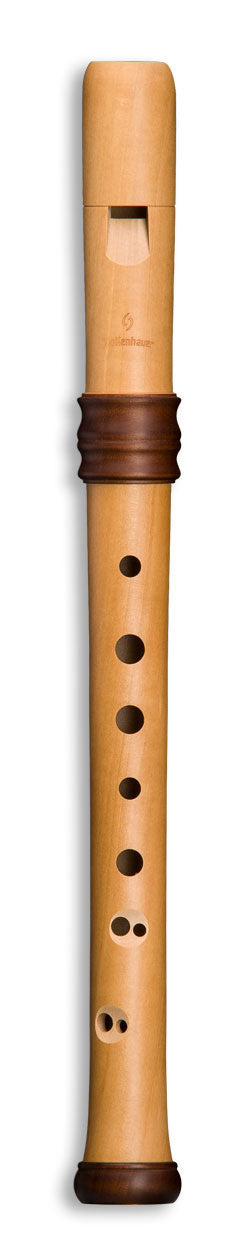
A bit of a confession… it wasn’t until a weekend working at the Saltaire Recorder Weekend that I decided I should probably own a recorder myself! My background is actually in saxophones, though a love for folk music had previously drawn me to tin whistles. After a chat with the team about what they might recommend to someone new to recorders with an interest in folk, the choice for me was clear - the Mollenhauer Dream. It is available in a few colours and materials at different price points, including blue or red pearwood, and wood/plastic combination, and even high quality ABS plastic for easy cleaning (and a glitter finish!). But for me, the natural pearwood was perfect. The larger finger holes make it an accessible instrument, and the wider bore gives it a rich sound that projects well and cuts through an ensemble if you find yourself playing in folk sessions. A great instrument for players of all levels.
Jessica Walsh’s Celtic Music for Recorder has proved to be a wonderful starting point for me. It is excellent for those not looking for a tutor book, with accessible yet beautiful tunes helping you find your own way around the recorder.
It’s far too easy to get distracted when practising. One minute you’re taking out your phone to open up the free, slightly clunky, possibly advert-filled metronome app, and before you know if, you’re scrolling on Instagram with your instrument sitting on your lap. Where did the last 20 minutes go?! Having a dedicated device to use as a tuner can make a world of difference to your playing time. Distraction free, precise, and reliable with a battery that seems to last for months on end, I highly recommend the Korg all-in-one. It helps you keep locked in to your practice from tuning up at the start, to gradually increasing the tempo as you work over a tricky passage. It really makes all the difference.
---

A plastic recorder is a solid place to start for the younger player, lightweight and virtually indestructible! For the young player the Yamaha 20B Soprano recorder has a bright, strong tone. Coming in a range of appealing bright colours this instrument gives the younger player a chance to express their personality a little!
For anyone starting out I always recommend Sarah Watts 'Red Hot Recorder Tutor Book 1' - with lively and appealing backing tracks to go alongside each pieces it means that the young player can make real music from the beginning with just one note. Helpful graphics and information boxes also build knowledge of notes and music theory in a logical step by step approach.
To support good posture and correct playing position right from the start a folding music stand is the essential tool. The lightweight RAT Scherzo 2 Lightweight Music Stand is ideal for young players to carry, it being much lighter and more compact than most music stands.
---
---

Today we are hearing audio samples from one of our staff picks. George's top choice, the Mollenhauer Dream Soprano in Pearwood is available in three colours (natural, red and blue) and offers a strong tone for a relatively inexpensive price. Its Renaissance-inspired design (but Baroque fingering) make it a popular choice for players of early music and folk music, while its wide bore and large finger holes offer great sound projection and player comfort. Check out the audio clips below or follow this link to find out more about this instrument.
Listen to this recorder!
Sammartini Allegro:
Van Eyck Nightingale:
Scale:
Leave a comment