Contact Us
hello@earlymusicshop.com
hello@earlymusicshop.com

Liam Byrne is one of the most distinctive voices in the world of the viola da gamba, moving between the instrument’s lesser-known historical repertoire and new music written for him by some of today’s leading composers. His work spans early music performance, collaborations with artists from across musical genres, and inventive projects exploring the viol’s extraordinary sound.
In this article, Liam shares what first drew him to the instrument, from its rich, malleable resonance to the unique playing techniques that give it such a distinctive voice. He also explores its history, how it works, and why the viol remains such a rewarding instrument to play, whether in a consort or as a solo instrument.
Read on for Liam’s personal introduction to the viola da gamba, and what makes this centuries-old instrument continue to capture the imagination of musicians today.
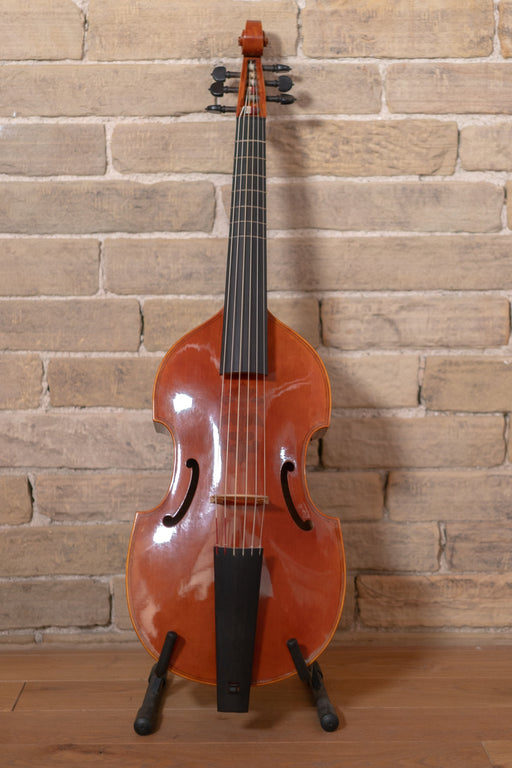
The cocktail party description of the viol I’ve been using for years is that it’s like a cross between a guitar and a cello, which was played throughout Europe between 1500-1800. This is mostly true, although its exact evolution in the 16th century is a little murkier and people never really stopped playing it, particularly in Britain. If I manage to squeeze in a second sentence, it's usually something about inherent melancholy, enchanting resonance, or delicate noblesse, depending on the crowd.

Lu Mi Tenor viol after Henry Jaye (string length 560mm). This standard tenor viol is made from very high quality wood and combines excellent craftm...
View full detailsJ. Wood 6 String Bass Viol after Barak Norman (c.1710) including hard case Our new range of J. Wood viols, exclusive to The Early Music Shop, prov...
View full detailsPO Ref. PO0951S 6 String Violone in G (Previously Owned) by David Holden, fully refurbished, serviced and fitted with new strings by our luthier. ...
View full detailsLu Mi Tenor viol after Henry Jaye ca1620 (string length 560mm) made to the highest possible standards. This tenor viol after Henry Jaye is made f...
View full detailsThe standard 7 string Bass Viol after Nicholas Bertrand (1704). This viol is modelled after a French bass viol by Bertrand and is particularly sui...
View full detailsThe Master 6 string Bass Viol after Richard Meares (c.1660). This viol is an ideal bass viol to play all kinds of renaissance and baroque continu...
View full detailsLu Mi Treble viol after Henry Jaye 1620 (string length 366mm), antique varnish. This treble viol after Henry Jaye is made from very high quality w...
View full detailsJ. Wood Treble Viol after Henry Jaye (c.1629) including hard case Our new range of J. Wood viols, exclusive to The Early Music Shop, provide a prem...
View full detailsLu Mi Pardessus de viole in g after Henry Jaye ca 1620(string length 310-315mm). This small pardessus de viol is made from very high quality wood a...
View full detailsLu Mi Treble viol after Henry Jaye (string length 360mm). This standard treble viol is made from very high quality wood and combines excellent craf...
View full detailsLu Mi Treble viol after Henry Jaye 1620 (string length 366mm). This treble viol after Henry Jaye is made from very high quality wood and combines ...
View full detailsLu Mi Large Tenor viol after Henry Jaye ca1620 (string length 577mm) made to the highest possible standards. This tenor viol after Henry Jaye is ...
View full detailsPO Ref. PO1681S Ceske Treble Viol after Jaye with Padded Case and Bow (Reconditioned) in very good condition. Fully serviced by our luthier prior...
View full detailsJ. Wood Tenor Viol after John Rose (c.1604) including hard case Our new range of J. Wood viols, exclusive to The Early Music Shop, provide a premiu...
View full detailsJ. Wood 7 String Bass Viol after Nicholas Bertrand (c.1726) including hard case Our new range of J. Wood viols, exclusive to The Early Music Shop, ...
View full details
Lu Mi hard case for treble viol. A light and robust case with carrying straps (back-pack style). Available in various colours including black, blue...
View full details
Extremely light fibre glass tenor viol case from IKA. Attractively designed yet hard and robust, they are the lightest cases in our catalogue. Th...
View full details
Lu Mi hard case for tenor viol. A light and robust case with carrying straps (back-pack style). Available in various colours including black, blue,...
View full details
Lu Mi hard case for 7-string bass viol. A light and robust case with carrying straps (back-pack style) and wheels. Available in various colours in...
View full details
Lu Mi hard case for 6-string bass viol. A light and robust case with carrying straps (back-pack style) and wheels. Available in various colours in...
View full details
Deluxe soft padded carrying case for tenor viol, with padded back straps, and a reinforced bow pouch. Height: 100 cm Width: 40 cm Depth: 16 cm Weig...
View full details
Deluxe soft padded carrying case for treble viol, with padded back straps, and a reinforced bow pouch. DimensionsHeight: 80 cm Width: 30 cm Depth: ...
View full details
Deluxe soft padded carrying case for bass viol, with padded back straps, and a reinforced bow pouch. With two pockets. One on the back for sheet m...
View full details
PO Ref. PO1731S Dolmetsch Bass Viol Bow (Reconditioned) in excellent condition. For more details about this or any other Reconditioned instruments,...
View full details
PO Ref. PO1729S Walter Mettal Tenor Viol Bow (Reconditioned) in excellent condition. For more details about this or any other Reconditioned instrum...
View full details